Electrostatic powder coating
This is an important construction technology with the fastest development in powder coating.
1) Basic principles
A high-voltage corona discharge electric field is formed between the spray gun and the workpiece. When the powder particles are ejected from the nozzle of the spray gun and pass through the discharge area, a large number of electrons are collected and become negatively charged particles, which are attracted by static electricity. Attracts to positively charged workpieces. When the powder adheres to a certain thickness, the effect of "same sex repulsion" will occur, and the powder can no longer be adsorbed, so that the thickness of the powder layer in each part will be uniform, and then the powder layer will be leveled and become a uniform film layer after heating, baking and curing.
2) Powder electrostatic spraying process
A typical powder electrostatic spraying process is as follows: upper part-degreasing-cleaning-rust removal-cleaning-phosphating-cleaning-passivation-powder electrostatic spraying-curing-cooling the next part
3) Main factors affecting the quality of powder electrostatic spraying
In powder electrostatic spraying, in addition to the quality of pretreatment on the surface of the workpiece, the factors affecting the quality of spraying include spraying time, spray gun type, spraying voltage, powder spraying amount, powder conductivity, powder particle size, powder particle size, powder and air mixture velocity gradient, etc.
1. Resistivity of powder
The electropositive rate of the powder is 1010~1016 ohm/cm, which is ideal. If the electropositive rate is too low, it will easily produce powder. If the dispersion resistivity is too high, the coating thickness will be affected.
2. Powder spraying amount
In the initial stage of spraying, the amount of powder sprayed has a certain influence on the film thickness. Generally, the amount of powder sprayed is small and the deposition rate is high. The amount of powder spraying is generally controlled within the range of 50 g/min to 1000 g/min.
3. Velocity and gradient of powder and air mixture
The velocity gradient is the ratio of the velocity of the powder-air mixture at the outlet of the spray gun to the spraying distance, and the film thickness will decrease with the increase of the spraying gradient within a certain spraying time.
4. Spray distance
Spraying distance is a main parameter for rejecting film thickness. Generally, it is controlled at 10-25 cm away from the workpiece, which is determined by the form of the spray gun.
5. Spraying time
Several parameters such as spraying time and spraying voltage, spraying distance, and spraying amount are mutually affected. When the spraying time increases and the spraying distance is large, the influence of spraying voltage on the limit value of film thickness decreases. With the increase of powder spraying time, the effect of powder spraying amount on the growth rate of film thickness is significantly reduced.
4) Water dispersion powder coating
Water-dispersed powder coating is the stable dispersion of powder coating in water medium. It has the advantages of both water-based coatings and powder coatings. All conventional methods including dipping, brushing, spraying and electrostatic coating can be used in the process.
Powder electrophoretic coating is the product of comprehensive powder coating and current coating, and has the characteristics of both. The basic principle is to disperse powder particles (generally required to be less than 40um) in an aqueous solution containing electrophoretic resin, use water-based electrophoretic resin as a carrier, and use powder particles as a film-forming substance to charge the powder particles and electrophoresis in a DC electric field. film deposition. It is suitable for the construction of workpieces with complex shapes.
5) Composition and structure of powder electrostatic spraying equipment
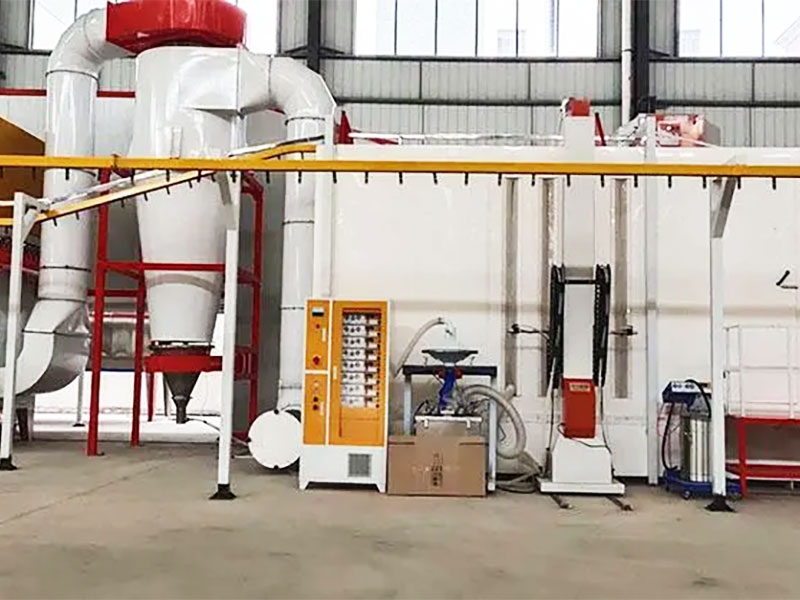
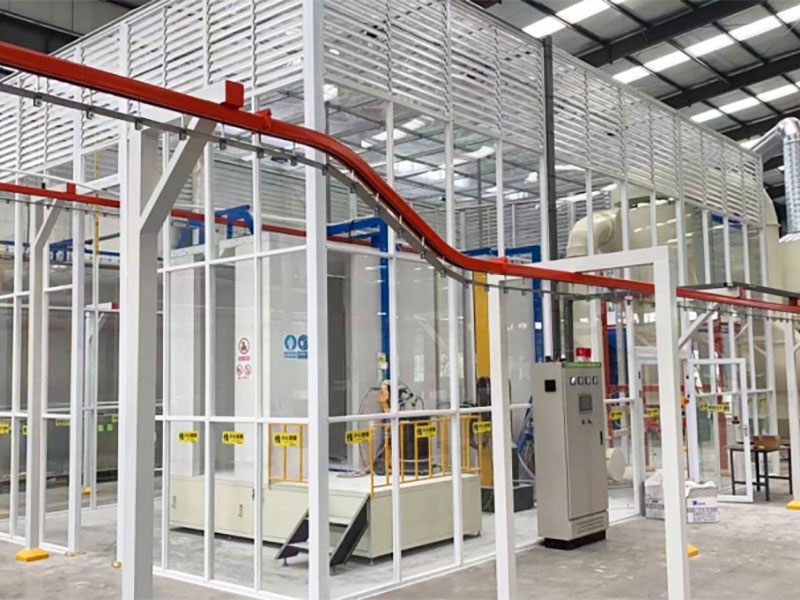
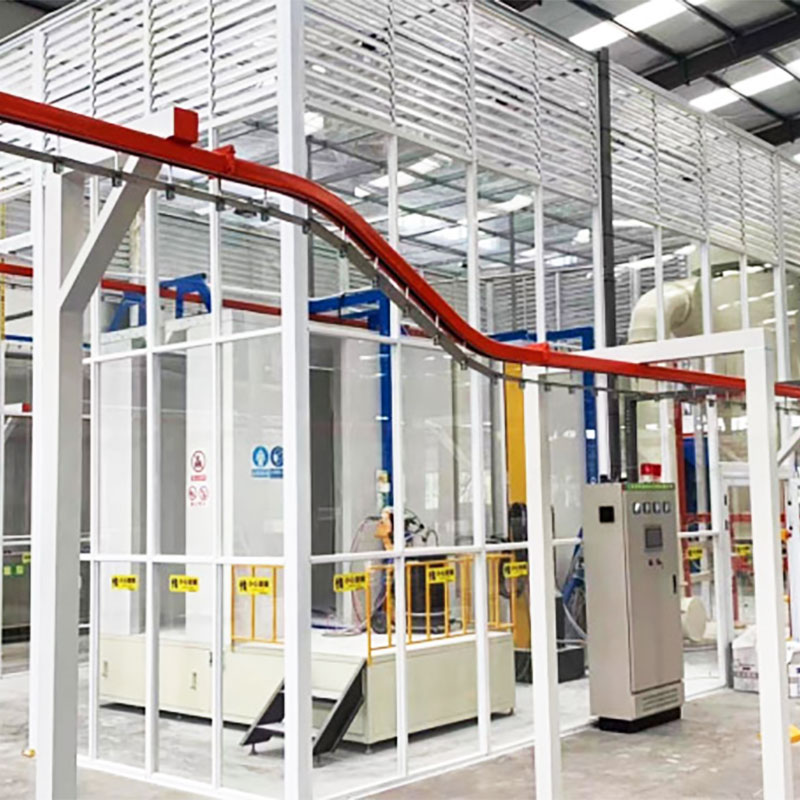
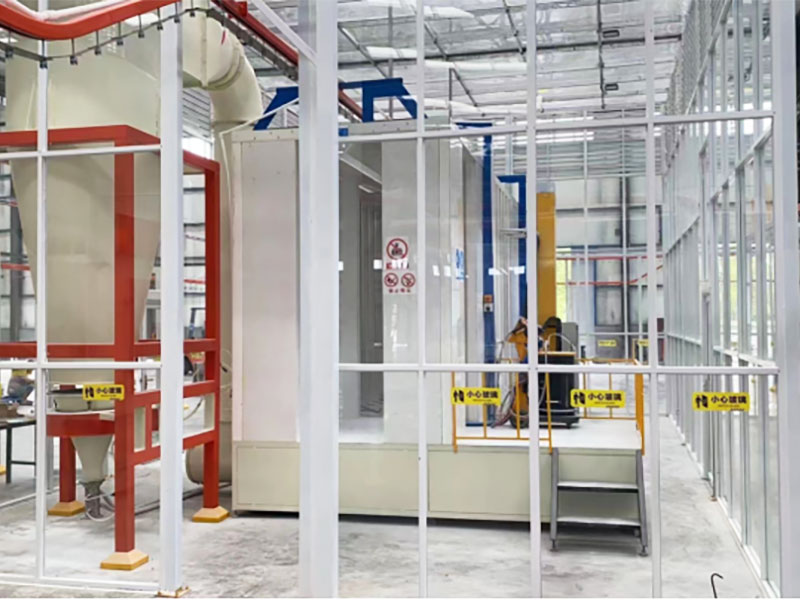
Powder electrostatic spraying equipment mainly includes: powder spraying room, high-voltage electrostatic generator, electrostatic spraying gun, powder supply device, powder recovery device, workpiece rotation mechanism, etc.
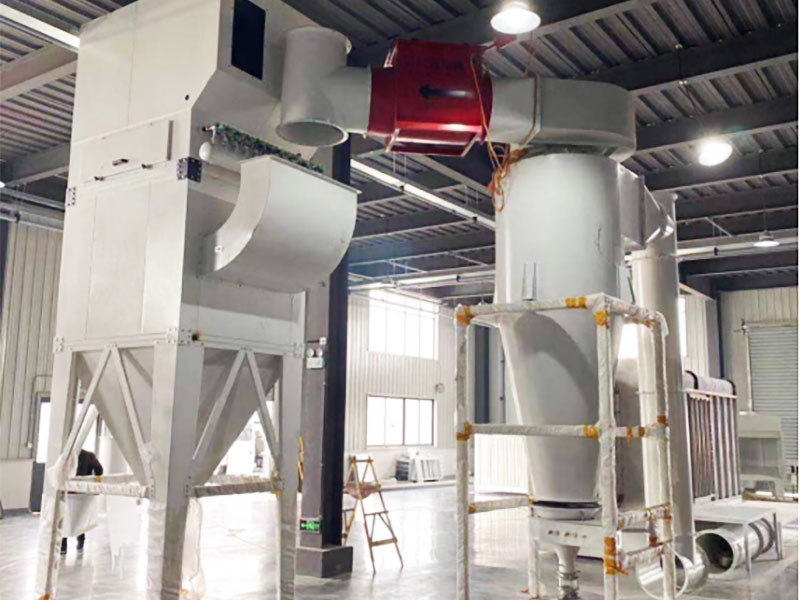
1. Powder room
The powder spray booth is one of the main equipment for powder electrostatic coating. Maintaining a smooth air flow is the cleanliness of the powder room, providing a clean working environment for the operator. Control the dust content in the spray room so that it is lower than the explosion limit (generally set at 10g/m3. In addition, the powder spray room should be easy to clean, so that the powder is not easy to deposit in the room, so that the color of the powder can be changed. There must be enough air in the room. light, in order to facilitate the coating work.
2. Electrostatic gun
Spray guns can be divided into portable powder spray guns, fixed automatic powder spray guns, disc spray guns, etc. according to their uses; according to the charging form, they can be divided into inner charged guns and outer charged guns; according to their diffusion mechanism, they can be divided into conflict guns. , Rebound gun, secondary air inlet gun, centrifugal rotary cup gun, etc.
The charging mechanism form of the powder spray gun is a key factor to improve the spraying efficiency.
Generally speaking, the core of powder spraying equipment is the spray gun and charging system. As far as the current market is concerned, the proportion of corona spray guns is very large, because the biggest advantage of using high-voltage corona discharge to charge the powder is that it can spray all kinds of thermosetting powder coatings today. And can get very good results. Its advantages are mainly manifested in excellent stability, powder feeding rate and powder feeding speed, etc.
The development process of this type of spray gun is as follows: voltage control o current control o total energy control. The total energy control is to adjust the voltage and current to the ideal state as the distance between the spray gun and the components of the workpiece is constantly adjusted to achieve the best coating effect.
3. Powder supply system
1) The powder supply system is to continuously and evenly transport the coated powder material from the powder container to the powder spray gun for spraying
The powder supply system is composed of air compressor, oil-water separator, air dryer, regulating valve, compressed air pipeline, electromagnetic control valve, powder supply device, powder delivery pipeline, etc.
2) The form of powder feeder
In the powder supply system of powder electrostatic spraying, there are many types of powder feeders used, which can usually be divided into: pressure vessel type, mechanical conveying type of screw or turntable, and Venturi air suction type.
3) Powder recovery device
Powder recovery can be divided into wet method and dry method
The wet method is to filter the airflow with the powder through the liquid container to achieve purification, and the powder with the liquid is dried and reused.
Thousand-type powder recovery is to collect powder particles in the powder airflow discharged from the powder spraying room. The types of powder recovery by the thousand-type method include gravity sedimentation, inertial separation, cyclone separation, sintering plate separation, etc. In actual production, multi-stage recovery devices are often used to achieve better separation effects.
Electrostatic powder spraying process
Electrostatic spraying process principle
The powder coating is sprayed onto the surface of the workpiece with electrostatic powder spraying equipment. Under the action of static electricity, the powder will be evenly adsorbed on the surface of the workpiece to form a powdery coating; Different final coatings; the spraying effect is superior to the spraying process in terms of mechanical strength, adhesion, corrosion resistance, and aging resistance.
Surface pretreatment.
The quality of the pre-treatment process directly affects the quality of the powder coating film. If the pre-treatment is not good, the coating film is easy to fall off and bubbling. Therefore, the pre-processing work must be paid attention to
(1) Chemical pretreatment can be used for sheet metal stamping parts. That is: degreasing, derusting, cleaning, phosphating (or purification), etc. Most of the workpieces with rust or thick surface can be derusted by sand blasting, shot blasting and other mechanical methods, but after mechanical derusting, the surface of the workpiece should be clean and free from dirt.
(2) Putty. Apply conductive putty according to the defect degree of the workpiece, smooth it with sandpaper after drying, and proceed to the next process.
(3) Protection (also known as cover). If some parts of the workpiece are not required to be coated, they can be covered with protective glue before preheating to avoid spraying paint.
(4) Preheating. Generally no preheating is required. If a thicker coating is required, the workpiece can be preheated to 100~160°C, which can increase the coating thickness.
2. Spraying
The workpiece enters the spray gun position of the powder spray booth through the conveyor chain to prepare for the spraying operation. The electrostatic generator releases high-voltage static electricity (negative pole) to the space in the direction of the workpiece through the electrode needle at the nozzle of the spray gun. The high-voltage static electricity makes the mixture of powder and compressed air sprayed from the nozzle of the spray gun and the air around the electrode ionized (negatively charged). The workpiece passes through the hanger and passes through the conveying link (ground electrode), thus forming an electric field between the spray gun and the workpiece. The powder reaches the surface of the workpiece under the double push of the electric field force and compressed air pressure, and forms a uniform layer on the surface of the workpiece by electrostatic attraction. coating
3. Baking and curing:
The sprayed workpiece is sent to the drying room at 180~200°C through the conveyor chain, heated and kept warm for a corresponding time (15-20 minutes) to melt, level and solidify, so as to obtain the desired surface effect of the workpiece. (different powders are different in baking temperature and time). This should be noted in the curing process.
Four, clean up
After the coating has cured, remove the protection and smooth out the burrs.
Five. Check
6. Packaging: After the inspection, the finished products are sorted and placed in transport vehicles and turnover boxes, and are separated from each other with soft packaging cushioning materials such as foam paper and bubble film to prevent scratches and wear (packages can be packaged according to customer requirements)